City Bug Report: Report Urban Issues
What happens if we crowd-source identifying, documenting and reporting potholes, broken streetlights and other urban issues with a city bug reporting platform?
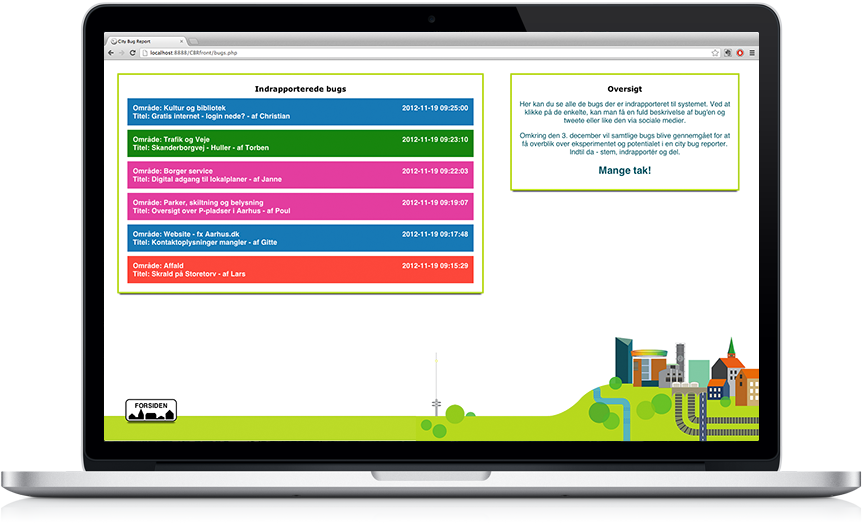
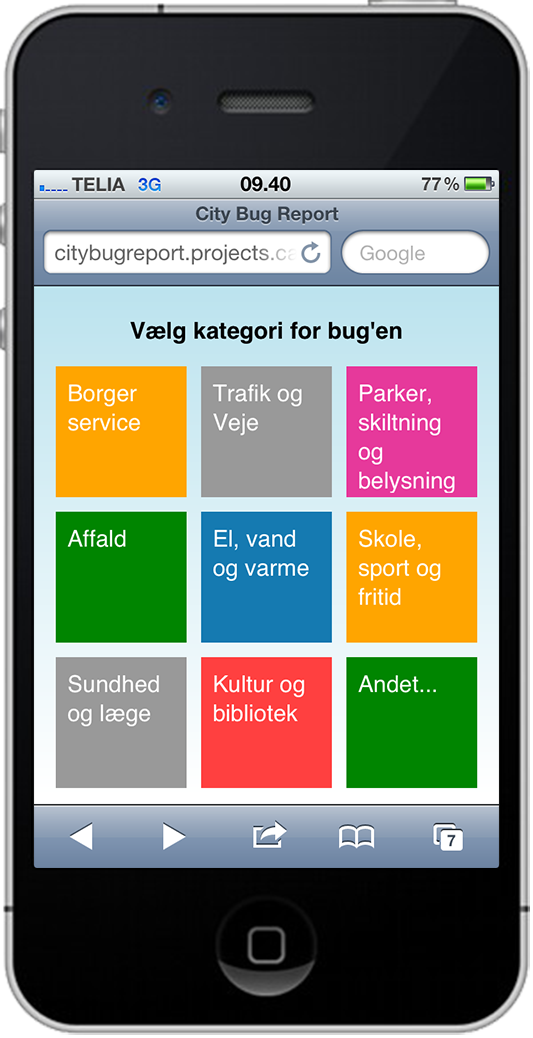
In 2012 I participated in the Media Architecture Biennale in Aarhus, Denmark. As part of the biennale, we wanted to develop a few media architecture installations to promote the festival and show-case perspectives related to smart city approaches. We developed a project centered around the idea that citizens should be able to inform the city (municipality) about issues as "City Bugs". The project consists of two components – a media facade installation and a bug reporting platform. The background was developed in collaboration with people from the citizen service department at the municipality of Aarhus and participants in a two-day workshop hosted by Smart Aarhus. I developed the initial idea and concept together with Martin Brynskov, and was technical lead on developing the service platform.
Urban Bugs
The platform borrows the notion of 'bug' reporting from the world of software and aims to enrol citizens in Aarhus as a help in identifying, qualifying and discussing urban and municipal issues.
When encountering an urban 'bug', citizens could report it using the online tool by selecting a category and providing a description and propose a solution. Once reported, the bug was available on the website and people could share it via social media. Each of the provided categories correspond to one of the responsible departments within the municipality, e.g. citizen service, waste management, culture and library services. The vision was that the reports could help management identify and prioritize issues, as well as provide more direct feedback to the citizens. Examples could be potholes, broken signs, missing translations, broken links etc.
I cannot take credit for any further developments, but a representative from the citizen service section of the municipality told us that the project at the time inspired them to do further explorations into more direct digital participation from citizens. Today, the municipality of Aarhus still maintains the "postlist" service for citizen inquiries and a modern hearing portal for public participation.
Examples and challenges
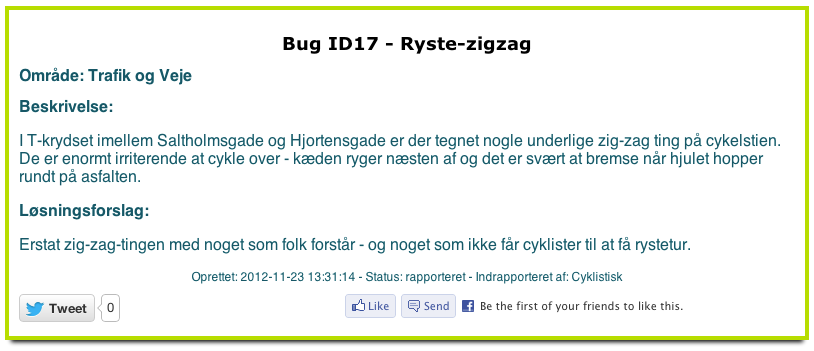
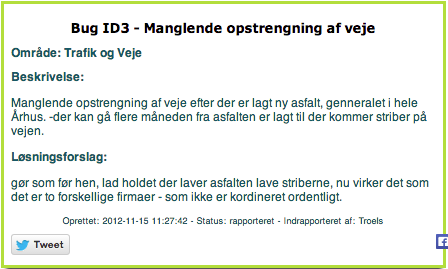
The platform was open for a couple of weeks and advertised in connection to the media facade installation on city hall. We received quite a lot of reports – with a significant amount of spam. A couple of examples are shown below.
There are a few important lessons from implementing the system and engaging with the various stakeholders in the project. The system demonstrates that you can get qualified input from citizens, and I speculate, over time could have a more direct communication with citizens around urban issues. But, this comes with expectations that the issues are addressed, which in turn require significant design efforts on the organizational side. Often citizens report issues that the different municipal departments are already aware of and have procedures in place for handling. However, the reported bugs may interrupt existing procedures and priorities with the city – annual maintenance plans, budgets, political decisions etc. Designing the municipal interface and procedures to catch incoming reports would be a significant and complex undertaking that would involve developing a new administrative system, and rethinking part of the organizational design and flow, budgeting, decision-making and in some cases policy.
Implementation
The system was implemented as a traditional web-application with HTML/CSS/JavaScript on the client layer, PHP on the backend and a MySQL database as a persistence layer.
Publications
There is more about the project in our MAB'2014 publication "City Bug Report: Urban Prototyping as Participatory Process and Practice". You can also read a small piece on the project in our local news paper (in Danish).